Hey there, fellow wisdom seekers! Have you ever felt that relentless tug-of-war between doing more, having more, and simply wanting to *be* more? In our always-on, hyper-connected world, it’s easy to get lost in the noise, constantly chasing the next big thing.
I know I have, and it often left me feeling utterly drained, wondering if there was a simpler, more authentic way to navigate life’s complexities. That’s precisely when I stumbled upon the profound philosophy of Taoism, and honestly, it felt like a breath of fresh air, a forgotten whisper from ancient times that suddenly made perfect sense in our modern chaos.
It’s not about complex rituals or rigid rules; it’s about a deep, intuitive understanding of the world and our place within it. Think of it as a practical guide to finding your flow, embracing simplicity, and unlocking a powerful sense of inner peace that feels genuinely achievable, even with our busy schedules.
If you’re tired of the constant hustle and ready to explore a path that values harmony over endless striving, then you’re in for a treat. Let’s dive deeper into these incredible insights below!
Embracing the Unseen Flow of Life
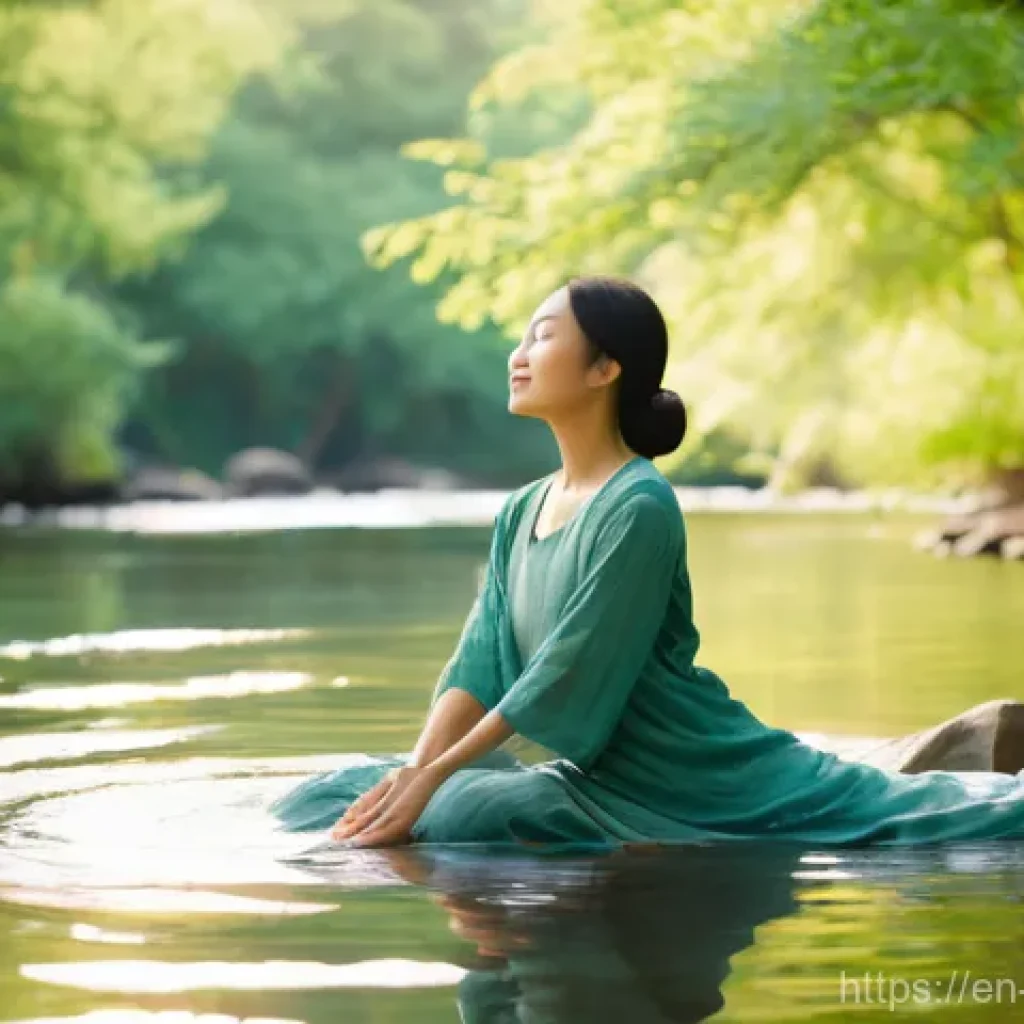
You know, it’s funny how often we try to paddle upstream in life, isn’t it? We set these ambitious goals, map out every single step, and then get utterly frustrated when reality decides to take a different route. I’ve been there more times than I care to admit, clinging to my meticulously crafted plans only to feel like I was fighting against an invisible current. But what if there’s a better way, a more intuitive approach to navigating life’s complexities? What if, instead of wrestling with the river, we learned to flow with it?
Taoism, in its beautiful simplicity, invites us to do just that. It’s about recognizing that there’s a natural rhythm to everything, an underlying energy that guides the universe, and we are an integral part of it. Think about a tree swaying gracefully in the wind – it doesn’t resist; it bends, it adapts, it thrives. Or consider water, effortlessly finding its way around obstacles, always moving towards its destination. When I started truly observing these patterns, not just intellectually but with an open heart, it was like a light bulb went off. I began to see how my own resistance was often the source of my struggle, rather than the external circumstances themselves. It’s a profound shift in perspective, moving from a rigid, controlling mindset to one of adaptable engagement, and it makes an incredible difference in how I experience my days.
Tuning Into Nature’s Rhythms
Our modern lives often disconnect us from these fundamental rhythms. We’re glued to screens, chasing deadlines, and living by artificial schedules, sometimes forgetting that we are, at our core, natural beings. I’ve found that simply taking a moment to step outside, really *feel* the sun on my face, or listen to the birdsong, can instantly recalibrate my inner compass. It’s a gentle reminder that there’s a world beyond my to-do list, a world operating on a grander, more effortless scale. This isn’t about abandoning responsibility; it’s about bringing a sense of natural timing and grace to our actions, understanding that some things require patience, while others demand swift, decisive movement.
Releasing the Need for Constant Control
Oh, the endless quest for control! It’s a trap I’ve fallen into so many times. We often believe that if we just plan harder, work longer, and push more, we can dictate every outcome. But life, as it always does, has a way of reminding us of our limitations. Taoism teaches us a powerful lesson here: true strength isn’t in rigid control, but in adaptable responsiveness. It’s knowing when to act with intention and when to step back and allow things to unfold. I remember a particularly stressful period when I was trying to micromanage every aspect of a creative project, and it just kept hitting roadblocks. The moment I took a deep breath, released some of my tight grip, and trusted the process and my team more, solutions started appearing almost magically. It felt less like a struggle and more like a dance.
Finding Your Center in the Eye of the Storm
Life can often feel like a whirlwind, can’t it? One moment you’re cruising along, the next you’re caught in a storm of deadlines, unexpected challenges, or emotional turbulence. It’s in these moments that I used to feel completely unmoored, tossed about by external circumstances. My heart would race, my thoughts would spiral, and I’d find myself reacting rather than responding. It was exhausting, to say the least, and utterly unproductive. Learning about the Taoist concept of finding one’s center changed everything for me. It’s not about avoiding the storm—because let’s face it, life will always have its squalls—but about cultivating an inner sanctuary, a place of stillness that remains untouched by the chaos raging outside. This isn’t some mystical, unattainable state; it’s a practical skill, something you can develop and rely on, even when everything around you feels like it’s falling apart.
I’ve noticed that when I’m centered, my decisions are clearer, my reactions are calmer, and I can approach problems with a level head, rather than a panicked one. It’s like being in the eye of a hurricane—the edges are wild, but right at the core, there’s a profound, almost eerie calm. My personal journey with this has involved simple practices: taking a few deep breaths before responding to a tense email, stepping away from my desk for five minutes to just observe my surroundings, or even just pausing for a beat before jumping into the next task. These small moments of intentional quietude accumulate, creating a powerful reservoir of inner calm that I can draw upon whenever the external world gets too loud. It’s truly transformative.
The Stillness Within: Your Inner Sanctuary
So, how do we find this elusive stillness? It’s often simpler than we imagine. For me, it started with realizing that my mind doesn’t have to be a constant chatterbox. We’re so conditioned to be busy, to think, to analyze, that silence can sometimes feel uncomfortable. But I’ve learned to appreciate those moments of quiet, whether it’s during my morning coffee, a walk in the park, or even just before sleep. It’s about consciously disengaging from the incessant mental commentary and simply *being*. This isn’t about meditating for hours, though that’s wonderful if you can. It’s about creating tiny pockets of peace throughout your day. I often tell myself, “Just for this minute, I’ll only focus on the sound of the rain,” or “For these few breaths, I’ll just feel my feet on the ground.” It sounds basic, but these small anchors bring me back to myself, no matter how turbulent my day might be.
Navigating Life’s Ups and Downs with Grace
Life is a constant ebb and flow, isn’t it? Highs and lows, successes and setbacks, joys and sorrows. When we’re not centered, these fluctuations can feel overwhelming, pulling us in every direction. But when we cultivate that inner stillness, we gain a valuable perspective. We learn to observe these ups and downs without being completely consumed by them. I used to get incredibly deflated by setbacks, seeing them as personal failures. Now, while I still feel the sting of disappointment, I can more easily separate myself from the outcome and see it as part of the natural cycle, a learning opportunity rather than an ending. It’s like watching waves from the shore—you see them rise and fall, but you remain firm on the ground. This shift in mindset allows me to ride the waves of life with much more grace and resilience, accepting that both good and challenging times are temporary and part of the rich tapestry of existence.
The Power of Letting Go: Less is Truly More
Oh, this one hits home for so many of us, doesn’t it? In a world that constantly tells us to acquire more, achieve more, and be more, the idea of “less is more” can feel counterintuitive, almost radical. But I’ve personally experienced the incredible liberation that comes with truly letting go—not just of physical clutter, but of mental baggage, outdated beliefs, and even certain expectations. For years, I chased what I thought success looked like, piling on responsibilities and possessions, only to find myself feeling more drained and less fulfilled. It was a constant uphill battle, and honestly, it left me feeling utterly depleted. Taoism gently reminds us that true richness often lies in simplicity, in focusing our energy on what genuinely nourishes us rather than spreading ourselves thin across countless distractions. It’s a profound shift from a mindset of accumulation to one of deliberate curation, both in our external world and within our inner landscape.
When I started intentionally decluttering my life, not just my closet but also my calendar and my digital space, it felt like taking a massive, freeing breath. The mental clarity that followed was astounding. I suddenly had more time, more energy, and a clearer sense of what truly mattered to me. It wasn’t about deprivation; it was about making space for the truly essential. It’s like pruning a plant – you cut away the excess branches not to harm it, but to allow it to grow stronger and bear more fruit. This philosophy isn’t just about minimalism; it’s about intentional living, understanding that every “yes” to something means a “no” to something else, and choosing those “yesses” wisely.
Decluttering Your Mind and Space
We often think of decluttering as a physical act, sorting through old clothes or dusty books. And yes, that’s a fantastic place to start! I remember spending a weekend going through my entire apartment, and the feeling of lightness afterward was incredible. But the real magic happens when you start applying that same principle to your mind. Our brains can become just as cluttered with worries, past regrets, future anxieties, and endless to-do lists. I’ve found that regular “mind purges” – whether through journaling, a brief meditation, or even just a focused walk – can be incredibly powerful. It’s like hitting the refresh button on your internal operating system. When my mind is clearer, I can think more creatively, solve problems more efficiently, and simply enjoy the present moment more fully. It allows genuine thoughts and insights to emerge, rather than being buried under layers of noise.
Prioritizing What Truly Matters
In our hyper-connected world, it’s so easy to get caught up in what everyone else is doing or what we *think* we should be doing. But Taoism encourages us to look inward and ask: what truly resonates with my deepest self? What brings me genuine joy and meaning? This isn’t always easy, as it requires tuning out external pressures and listening to that quiet inner voice. For me, it meant realizing that constantly chasing external validation was draining my energy and diverting me from the things I truly cared about, like meaningful connections and creative expression. I started deliberately allocating my time and energy to activities and relationships that genuinely nourished my spirit, and saying a firm “no” to things that didn’t align with my core values. It was a game-changer. Suddenly, my life felt less like a never-ending sprint and more like a purposeful, enjoyable journey.
Cultivating Inner Peace Amidst External Chaos
Let’s be real, life isn’t always a serene, flowing river. Sometimes it feels like a raging torrent, doesn’t it? Unexpected crises, difficult people, constant demands – the world outside us can often feel like a chaotic mess. My default response used to be to either get overwhelmed and shut down, or to try and frantically control every variable, which usually just led to more frustration. But through exploring Taoist wisdom, I’ve come to understand that cultivating inner peace isn’t about eliminating external problems; it’s about fundamentally changing how we *relate* to them. It’s about developing an internal fortress of calm, a resilience that allows us to navigate even the stormiest seas without losing our footing. This isn’t passive resignation; it’s an active, conscious choice to maintain our equilibrium, regardless of what’s unfolding around us. It’s an empowering shift, moving from being a victim of circumstance to being the captain of our inner state.
I’ve personally experienced the profound impact of this shift. There have been times when external pressures were immense, and my old self would have been a bundle of nerves. But by applying these principles, I found myself able to approach those situations with a surprising degree of calm. It doesn’t mean the problems magically disappear, but it means I can think more clearly, make better decisions, and act more effectively. It’s about recognizing that while we can’t always control what happens *to* us, we absolutely can control our response *to* it. This realization has been one of the most liberating insights of my life, allowing me to move through challenging times with a sense of groundedness that I never thought possible. It transforms chaos from something to fear into something to skillfully navigate.
Responding, Not Reacting
This is a huge one, and it’s something I’m constantly working on. Our immediate, knee-jerk reactions often come from a place of fear, habit, or ego. Someone says something cutting, and our instinct is to lash back. A plan goes awry, and our first thought is panic. But true inner peace comes from creating a conscious pause between stimulus and response. That tiny space is where our power lies. I’ve found that simply taking a deep breath, counting to ten, or even mentally stepping back for a moment before I speak or act, can make all the difference. It allows me to choose my response from a place of wisdom and calm, rather than being swept away by emotion. It’s like holding a delicate glass – a reactive grab might break it, but a calm, intentional grasp will secure it. This practice has not only brought me more peace but has also significantly improved my relationships and problem-solving abilities.
The Wisdom of Acceptance
Acceptance isn’t about giving up or condoning negative situations. It’s about acknowledging reality exactly as it is, without resistance or judgment, at least initially. This can be incredibly challenging, especially when facing difficult truths. My own journey has shown me that fighting against what *is* only prolongs suffering. It’s like being caught in quicksand – the more you struggle, the deeper you sink. True acceptance, however, frees up an enormous amount of energy that was previously spent on resistance. It allows us to see the situation clearly, understand its nature, and then, from that place of clarity, decide on the most effective path forward. It’s not about liking everything that happens; it’s about embracing the present moment as the starting point for whatever comes next, empowering us to move through adversity with a resilient spirit. This doesn’t mean we don’t strive for change, but it means we start from a place of clear-eyed reality rather than emotional turmoil.
The Art of Effortless Action (Wu Wei in Practice)

Okay, so “effortless action” might sound a bit like a paradox, right? Especially in a culture that champions hustle, grind, and pushing through resistance. For a long time, I genuinely believed that the more effort I poured into something, the better the outcome would be. And while perseverance is definitely a virtue, I also found myself burning out, hitting walls, and feeling utterly drained. That’s when I discovered the Taoist principle of Wu Wei, often translated as “non-action” or “effortless action,” and it was a total game-changer for my perspective and my productivity. It’s not about being lazy or doing nothing at all; it’s about acting in alignment with the natural flow of things, without forcing, straining, or overthinking. It’s like a skilled carpenter who knows exactly where to place the chisel and how much force to apply – they don’t fight the wood; they work *with* it. The results are elegant, efficient, and surprisingly powerful.
My experience with Wu Wei has been profound. I remember a specific project where I was trying to force a particular outcome, endlessly tinkering and pushing, and it just wasn’t gelling. I was exhausted and frustrated. Then, I took a step back, cleared my head, and tried to approach it from a different angle, allowing ideas to emerge naturally instead of trying to strong-arm them. Suddenly, solutions presented themselves, connections were made, and the entire process felt smooth and intuitive. It wasn’t that I stopped working; it’s that my work became more intelligent, more aligned. It felt like I was riding a wave rather than trying to create one from scratch. This principle is about finding the path of least resistance, not out of weakness, but out of wisdom. It’s about leveraging natural tendencies rather than fighting against them, leading to far greater effectiveness and a significant reduction in stress.
Aligning with Your Natural Strengths
One of the beautiful aspects of Wu Wei is its emphasis on understanding and working with your own natural talents and inclinations. We all have unique strengths, things we do effortlessly, almost instinctively. Yet, how often do we get sidetracked trying to excel in areas where we naturally struggle, simply because we feel we “should”? I’ve certainly been guilty of that. I used to spend so much time trying to perfect tasks that felt like pulling teeth, when I could have been leveraging my innate abilities for much greater impact and joy. Taoism encourages us to identify these natural currents within ourselves and to channel our energy where it flows most easily and effectively. It’s not about avoiding challenges, but about approaching them from a position of strength, making the effort feel less like a chore and more like a fulfilling expression of self. When you’re in your zone, things just seem to click.
When to Act, When to Observe
This is perhaps the most subtle and powerful lesson of Wu Wei: discerning the right time for action and the right time for observation. We live in a world that often demands immediate action, but sometimes, the wisest course is to simply pause, watch, and listen. Rushing into things often leads to wasted effort, errors, or missed opportunities. I’ve learned, sometimes the hard way, that waiting for clarity, allowing a situation to fully unfold, or gathering more information can lead to far more effective and harmonious outcomes. It’s like waiting for the perfect wave to surf – you don’t just paddle frantically at every ripple; you observe, you wait, and then you act with precision and power. This discernment requires patience and trust, both in yourself and in the unfolding of events, but the rewards in terms of reduced stress and increased effectiveness are truly immense. It’s a dance between intentional engagement and mindful detachment.
Simplifying Your Path to Profound Fulfillment
Have you ever felt like you’re constantly chasing something, only to find that once you get it, the satisfaction is fleeting? I know I have. For a long time, my definition of “fulfillment” was tied to external metrics: a bigger title, a higher income, more possessions, or constant external validation. And while there’s nothing wrong with ambition, I found myself in a perpetual state of striving, never quite feeling like I had “arrived.” It was an exhausting cycle, leaving me wondering if true contentment was even possible. Taoism offered me a radically different perspective, one that redirected my focus from external accumulation to internal cultivation. It’s about recognizing that profound fulfillment isn’t something you acquire; it’s something you uncover from within, by simplifying your life and aligning with your authentic self. It’s a deeply personal journey of stripping away the non-essentials to reveal what truly nourishes your soul.
This path of simplification isn’t about giving up on your dreams or becoming ascetic. Far from it! It’s about consciously choosing what truly adds value to your life and letting go of what drains your energy or distracts you from your core purpose. My own journey with this has involved reassessing my priorities, decluttering my schedule, and even re-evaluating my relationships to ensure they are genuinely supportive and uplifting. The result has been a remarkable sense of peace and a deeper, more sustainable joy that isn’t dependent on external circumstances. It’s like tending a garden – you remove the weeds so the healthy plants can flourish. This intentional focus on what truly matters allows for a richer, more meaningful existence, one where satisfaction comes not from having more, but from truly *being* more, in the most authentic sense.
Redefining Success Beyond the Hustle
Our society often equates success with relentless ambition, constant busy-ness, and outward achievements. While these can be fulfilling, if they are the *only* measure, we risk losing touch with ourselves. I’ve personally had to unlearn a lot of these ingrained notions of success. I used to feel immense pressure to always be “on,” always striving for the next big thing, and it left me feeling hollow. Taoism gently suggests that true success might look a little different: it could be a profound sense of inner peace, harmonious relationships, genuine connection with nature, or simply the quiet joy of living authentically. It’s about finding satisfaction in the process, in the present moment, rather than constantly deferring happiness until some future achievement. This shift allowed me to appreciate my journey more fully and to celebrate small victories, realizing that the greatest accomplishments often come from a place of balanced well-being, not frantic effort.
Embracing Imperfection and Growth
In our pursuit of perfection, we often become our own harshest critics, constantly striving for an ideal that may not even exist. This can be incredibly paralyzing and draining. Taoism, with its emphasis on the natural flow of things, reminds us that imperfection is inherent in life, and in fact, it’s often where growth truly happens. Think of a perfectly smooth stone versus a unique, weathered rock – the latter tells a story, embodies character, and holds more interest. I’ve personally found immense freedom in letting go of the need for everything to be flawless. It’s not about being sloppy, but about recognizing that mistakes are learning opportunities, and that our journey is about continuous evolution, not instant perfection. This acceptance of imperfection allows for greater self-compassion, more creative exploration, and a much more enjoyable and sustainable path to personal development. It’s about embracing the beautiful, messy process of becoming.
Navigating Decisions with Intuitive Wisdom
Making decisions can sometimes feel like standing at a crossroads with a hundred different signs pointing in every direction, can’t it? We’re often taught to approach decisions with strict logic, endless pros and cons lists, and analytical breakdown. And while rational thought is undoubtedly valuable, I’ve found that exclusively relying on it can sometimes leave us feeling stuck, overthinking, and disconnected from our deepest knowing. There are moments when the “logical” choice just doesn’t *feel* right, or when all the data points seem to contradict each other. That’s precisely where Taoism offers a profound tool: the cultivation of intuitive wisdom. It’s about learning to listen to that quiet inner voice, that gut feeling, that sense of resonance that often guides us more accurately than pure reason alone. This isn’t about abandoning logic, but about integrating it with a deeper, more holistic understanding that comes from within. It’s like having an internal compass that points towards your true north, even when the external maps are confusing.
My own journey with this has been incredibly revealing. I’ve made decisions purely based on what looked good on paper, only to find myself regretting them later because they didn’t align with my inner sense of purpose. Conversely, there have been times when an opportunity seemed less “logical” but felt incredibly right in my gut, and those decisions have almost always led to the most fulfilling and authentic outcomes. This isn’t some mystical power; it’s a skill you can develop by tuning into your body’s subtle cues, paying attention to your emotions, and practicing moments of quiet reflection. It’s about trusting that you already possess a deep well of wisdom, often overshadowed by external noise and internal chatter. When you learn to tap into it, decision-making becomes less of a struggle and more of a fluid, confident process, leading you down paths that feel genuinely right for you.
Listening to Your Inner Compass
How often do we override our gut feelings because our logical mind tells us something else? I used to do this all the time. That subtle knot in my stomach, that fleeting sense of unease – I’d dismiss it as irrational. But Taoism, and my own experience, has taught me that these internal signals are incredibly valuable. Your inner compass is constantly calibrating, drawing on a vast network of experiences, emotions, and subtle perceptions that your conscious mind might not even register. Learning to listen to it means practicing mindfulness, paying attention to how different options *feel* in your body, not just how they look on paper. It’s about creating space for that quiet inner voice to be heard above the din of external advice and internal anxieties. I’ve found that meditating on a decision, or simply taking a walk in nature and letting my mind wander, can often bring clarity that hours of analytical thinking couldn’t provide. It’s like allowing the water to settle so you can see to the bottom of the well.
Trusting the Process, Even When Unclear
Sometimes, despite our best efforts, the path forward remains hazy. We might have a general direction, but the specific steps are unclear. In these moments, our instinct might be to panic, to force a solution, or to become paralyzed by indecision. But Taoist wisdom encourages us to trust the process, to embrace the unknown, and to allow clarity to emerge organically. It’s about taking the next obvious step, however small, without needing to see the entire staircase. This requires a certain level of faith and patience, which can be challenging in our instant-gratification world. I’ve personally learned that some of the most profound breakthroughs have come not from forcing an answer, but from allowing myself to be in a state of not knowing, while still remaining open and observant. It’s during these periods of seemingly unproductive “waiting” that new insights often crystallize, and the path forward suddenly becomes clear. It’s a powerful reminder that not all growth is linear or immediately visible.
| Principle | Traditional Interpretation | Modern Application & Benefit |
|---|---|---|
| Wu Wei (Effortless Action) | Non-doing, acting in harmony with nature. | Reduces burnout, increases efficiency by aligning actions with natural strengths and optimal timing, fosters creativity. |
| P’u (Uncarved Block) | Simplicity, naturalness, being in one’s original state. | Cultivates authenticity, reduces external pressure, promotes clarity of purpose, enhances inner peace by shedding artificial desires. |
| Ziran (Spontaneity) | Naturalness, acting without contrivance. | Boosts adaptability, encourages intuition, fosters genuine expression, leads to more joyful and less stressful interactions and decisions. |
| Te (Virtue/Integrity) | Moral character, inherent power. | Builds trust, strengthens personal ethics, provides a strong moral compass, grounds decision-making in integrity, leading to lasting fulfillment. |
글을 마치며
And there you have it, friends! What a journey we’ve embarked on, exploring these profound Taoist principles that, frankly, have reshaped my own life in incredible ways. It’s not about rigid rules or ancient rituals; it’s about a gentle recalibration, a conscious choice to live with more intention, grace, and inner peace amidst our wonderfully complex modern world. I truly hope that sharing my own experiences and insights has sparked something within you, a curiosity to explore how these timeless wisdoms can bring more harmony and fulfillment into your daily existence. Remember, it’s not about being perfect; it’s about making conscious choices, one gentle step at a time.
알아두면 쓸모 있는 정보
Here are a few quick, actionable insights that have personally helped me integrate these ideas into my hectic life. Trust me, these aren’t just theoretical concepts; they’re daily practices that genuinely make a difference.
1. The Five-Minute Reset: Whenever you feel overwhelmed, step away for just five minutes. Seriously. Close your eyes, take a few deep breaths, and simply observe your surroundings without judgment. This tiny pause can prevent a spiral and bring you back to your center. I do this multiple times a day, and it’s a lifesaver for my focus and mood.
2. Declutter One Thing a Week: Don’t try to overhaul your entire life at once. Pick one small area each week – a drawer, a digital folder, even one mental commitment – and consciously let go of what no longer serves you. You’ll be amazed at how this small act of physical or mental decluttering creates spaciousness.
3. Listen to Your Gut (The “Uh-Oh” Feeling): Before making a decision, big or small, pause and check in with your body. Does it feel light and expansive, or is there a subtle “uh-oh” knot in your stomach? That initial, often fleeting, feeling is your intuitive wisdom speaking. I’ve learned the hard way to trust that feeling, even when logic argues otherwise.
4. Embrace Imperfection as Progress: Ditch the idea of flawless execution. Life is messy, and that’s where the beauty and growth happen. When I catch myself striving for unattainable perfection, I remind myself that “good enough” is often perfectly sufficient, and allows me to actually *finish* things and learn along the way. It’s about being a human *being*, not a human *doing* flawlessly.
5. Find Your “Wu Wei” Zone: Pay attention to the activities where you feel most effortlessly engaged and energized. These are often aligned with your natural strengths. Try to intentionally weave more of these “flow state” activities into your week, whether it’s a hobby, a specific task at work, or even a conversation. It’s where you’ll find genuine joy and productivity without feeling drained. For me, it’s writing and connecting with you all!
중요 사항 정리
Stepping into a more Taoist-inspired life isn’t about abandoning your goals or becoming passive; it’s about cultivating a profound inner wisdom that guides your actions with grace and effectiveness. It means embracing life’s natural flow, recognizing that sometimes less truly is more, and finding a deep sense of peace that isn’t dependent on external circumstances. By fostering your inner stillness, learning to respond rather than react, and trusting your intuitive compass, you unlock a powerful ability to navigate challenges with resilience and make decisions that truly align with your authentic self. This journey is about simplifying your path to profound fulfillment, allowing you to experience a richer, more harmonious existence where effort feels less like a struggle and more like a dance with the universe. It’s a continuous, gentle practice of letting go of the need for rigid control and instead finding strength in adaptability, authenticity, and the quiet power of simply being present.
Frequently Asked Questions (FAQ) 📖
Q: I’ve heard of Taoism, but what exactly is it, and why is it suddenly so relevant for our modern, hectic lives?
A: That’s a fantastic question, and one I get all the time! When I first dipped my toes into Taoism, I was a bit overwhelmed by the ancient texts, but what I quickly realized is that at its heart, Taoism isn’t about some rigid set of rules or a specific religion you have to convert to.
Think of it more as a profound philosophy, a way of looking at the world and your place within it that emphasizes harmony, balance, and going with the natural flow of things, rather than constantly swimming upstream.
For me, it was like someone finally gave me permission to breathe. In our “always on” world, where we’re constantly bombarded with demands to do more, achieve more, and be “better” in some external way, Taoism offers a refreshing counter-narrative.
It encourages us to rediscover our inner wisdom, to simplify, and to trust the organic rhythms of life. It’s about understanding that trying to control everything often leads to more stress, and that sometimes, the most powerful thing you can do is let go and adapt.
It feels incredibly relevant now because so many of us are craving that genuine connection to ourselves and a less frenetic existence. It’s a practical guide to finding peace without having to retreat to a mountaintop, right here, right now, amidst all the daily chaos.
Q: Okay, “going with the flow” sounds great in theory, but how can I actually apply Taoist principles when my life is full of deadlines, responsibilities, and endless to-do lists?
A: I totally get it – saying “go with the flow” when you’re staring down a mountain of emails feels almost sarcastic, doesn’t it? But here’s where the practical magic of Taoism really shines, and where I’ve personally found so much relief.
It’s not about becoming passive or ignoring your responsibilities; it’s about shifting your approach. One concept I absolutely adore is “Wu Wei,” which often gets misinterpreted as doing nothing.
But for me, it’s about “effortless action” or “action without over-striving.” Instead of forcing things, try to find the path of least resistance. For example, if a project feels like it’s hitting a wall, instead of ramming through it, step back.
Maybe you need to approach it from a different angle, consult someone new, or simply take a break and let your subconscious work on it. I’ve noticed that when I stop trying to control every tiny detail and trust that some things will unfold naturally, solutions often appear much more easily.
Another tip is to embrace “P’u,” or the “Uncarved Block.” This means returning to simplicity, seeing things as they are without over-complicating them.
When your to-do list feels overwhelming, break it down. Focus on one task at a time, giving it your full attention, rather than multitasking frantically.
You’ll be amazed at how much more effective and less stressed you become. It’s about working smarter, not just harder, and finding your rhythm within the demands of your day.
Q: What kind of actual benefits can I expect if I start incorporating Taoist ideas into my daily routine? Will I suddenly become enlightened, or is it more subtle?
A: Oh, that’s a brilliant question, and honestly, the benefits are both profound and wonderfully subtle. You won’t wake up one day levitating (unless that’s your thing, haha!), but what you will experience is a gradual, yet incredibly powerful, shift in your inner landscape.
For me, the biggest takeaway has been a significant reduction in stress and anxiety. When you learn to release the need to control every outcome, and truly understand that change is the only constant, you stop fighting against the current so much.
That constant internal tug-of-war I mentioned in the intro? It starts to quiet down. You’ll likely find yourself feeling more resilient, more adaptable when unexpected things pop up, which, let’s face it, happens all the time in life!
Another huge benefit is a clearer sense of purpose and direction, not because you’ve rigidly planned every step, but because you’re more attuned to your own natural inclinations and the opportunities that spontaneously arise.
I’ve personally felt a deeper connection to my intuition and a greater sense of peace, even when things around me are chaotic. It’s about cultivating a deep sense of inner calm that isn’t dependent on external circumstances.
You become more present, more mindful, and ultimately, more authentically you. It’s a journey of gentle transformation, one where you shed what doesn’t serve you and embrace a more harmonious, joyful existence.